Save $995 on all projects over $10,000! Learn more

Why Does Pressboard Siding Deteriorate and Eventually Fail?
Across the United States, thousands of homes from the eighties and nineties still wear the same pressboard or hardboard siding they started with. On many of those houses, the siding still looks fine from the street, even while slow, hidden damage creeps in behind the panels. That is why a simple question keeps coming up for owners of older homes who wonder what is going on with their exteriors: what is pressboard or hardboard siding, and why does it fail?
Pressboard siding once looked like a smart shortcut to the warm look of wood at a lower price. Then a massive class action lawsuit in the mid‑nineties exposed how often it broke down, especially when exposed to moisture, and manufacturers stopped making it. The siding that stayed on homes, though, did not go anywhere, and many owners are only now seeing the full cost of that earlier choice.
This article walks through what pressboard or hardboard siding really is and why it fails over time. It explains the warning signs of trouble, why patch work rarely solves the problem, and why modern fiber cement siding gives a far better long‑term result. Along the way, it shows how a specialist like Keystone Siding & Windows helps Greater Atlanta homeowners replace failing siding before it turns into serious structural damage.
As many home inspectors like to say, “Water and wood are a bad mix once they meet without protection.”
Understanding Pressboard And Hardboard Siding – Composition And History
Pressboard, often called hardboard siding, is an engineered wood product made from very small pieces of wood rather than solid boards. Manufacturers break wood down into fibers, chips, and flakes, then mix those particles with glues and resins. Under high heat and pressure, this mix presses into dense panels that can be molded with a wood grain pattern, so the finished product looks similar to painted wood.
During the eighties and early nineties, builders used this material on huge numbers of homes because it:
- Cost less than real wood siding
- Weighed less than many other options
- Installed quickly in large sheets on production jobs
For builders working on entire neighborhoods, those advantages felt very appealing. To homeowners, newly built houses with this siding simply looked like nice painted wood, and few people asked what pressboard or hardboard siding was or how it might behave after twenty or thirty years.
Several large companies produced these panels. Masonite was so common that many people still use the name for any hardboard siding. Other major brands included Louisiana‑Pacific, Georgia Pacific, Weyerhaeuser, and Boise Cascade. Each company had its own formulas, yet they all relied on pressed wood fibers glued together, which created the same basic weakness when water reached the core.
By the mid‑nineties, widespread complaints about swelling, rot, and early failure led to a landmark class action lawsuit. Homeowners with siding installed during roughly 1980 through the late nineties could request payment for damage. After that legal case, most manufacturers stopped making pressboard siding. That means anyone who still has it on a home now owns a legacy material whose main flaw lies in the way wood fibers and glue react to long‑term moisture exposure.
The Two Primary Reasons Pressboard Siding Fails
Pressboard siding does not fail because of one bad storm or one missed paint job. It fails for two connected reasons. The material itself soaks up water far more readily than solid lumber, and common installation mistakes give that water a direct path inside the boards. When those two factors meet, deterioration speeds up and the outer skin that once looked solid can lose its strength far faster than the original marketing promised.
Inherent Water Absorption And Material Breakdown
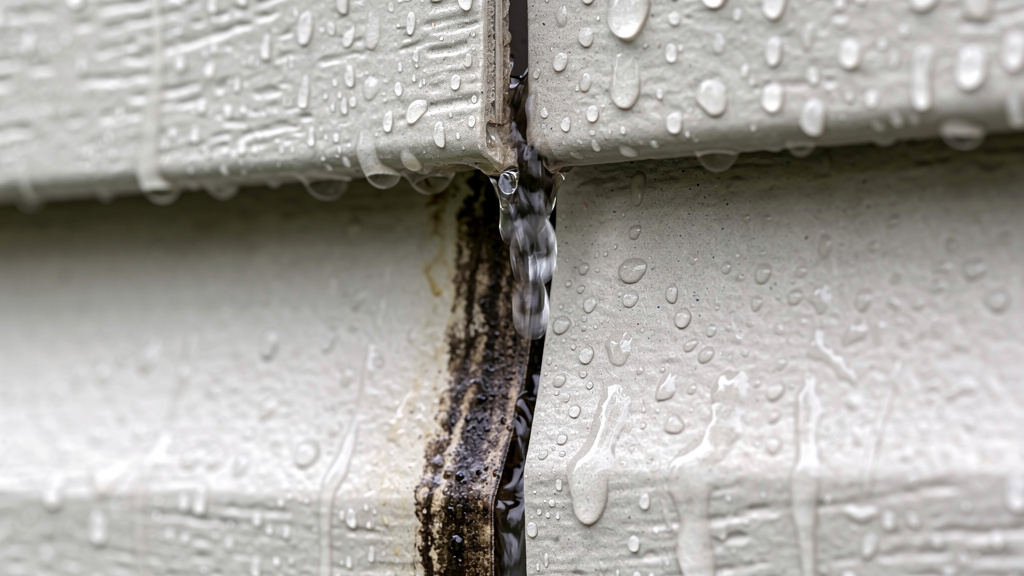
At the heart of every sheet of hardboard lies compressed wood fiber. Those tiny fibers behave almost like a sponge when water reaches them. As long as paint, primer, and caulk form an intact shell, that sponge stays mostly dry. Once that shell cracks, peels, or separates at joints, though, moisture can slip inside and reach the core.
Once water enters, a chain reaction starts:
- The wood fibers swell and push against each other.
- The glues and resins that hold the board together begin to soften and separate as they stay damp.
- Repeated wet‑dry cycles cause the panel to expand and contract, opening more paths for water.
The surface may still look painted, yet the board behind that paint can start to bow, blister, and crumble. In humid climates such as Greater Atlanta, ordinary rain, lawn sprinklers, splash from soil, and condensation around shaded areas all add more moisture than the material can handle over time.
At that point, the question is less what is pressboard or hardboard siding and why does it fail and more how far has the damage already spread. Rot, mildew, and decay thrive in that damp core and can move from one section of siding into sheathing or framing. Once this internal breakdown starts, no amount of paint can reverse it. Replacement becomes the only real fix.
Contractors often sum it up this way: “Once pressed wood swells, it never truly goes back.”
Installation Errors That Accelerate Failure
Even if the material had no flaws, poor installation would still shorten its life. With pressboard siding, installation mistakes do more than shorten life; they speed up the very weaknesses that the lawsuit highlighted. Many older homes around Atlanta show the same patterns that started right on day one.
A few of the most common issues include:
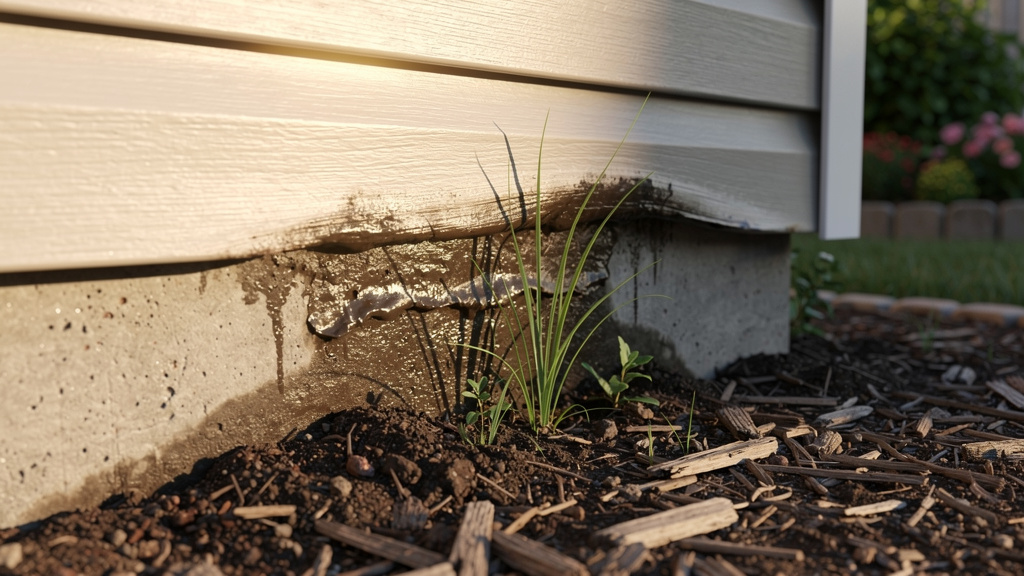
- Ground clearance problems
Pressboard siding should sit several inches above soil, mulch, or concrete so that splashing rain and standing water do not wick up into the panels. When installers run the siding too low, the bottom edges stay damp far too often and begin to swell and flake. That damage then moves upward. - Unsealed edges and joints
Every cut end, butt joint, and vertical seam should receive proper primer and high‑quality caulk. When those steps get skipped or done with low‑grade materials, open paths form straight into the fiber core. Overdriven nails create small cups that hold water against the surface, and unsealed nail heads give water another route inside. - Missing or weak flashing and housewrap
Pressboard siding sometimes went directly against brick, block, or stone without proper flashing and housewrap. That trapped moisture where it could not dry out. Weak flashing around windows and doors also let water slide behind panels with no path to drain away.
When owners ask why pressboard or hardboard siding fails so quickly on certain homes, these details often tell the story. Instead of the twenty‑ to thirty‑year life once suggested, many installations showed serious failure in ten to fifteen years, and some in even less time.
Warning Signs Your Pressboard Siding Is Failing
Once homeowners know how vulnerable this material is, the next step is to spot trouble before it spreads deeper into the structure. Regular visual checks, along with a light touch test in suspect areas, can reveal a lot about current condition.
Common warning signs include:
- Severe swelling, blistering, and warping
Boards may bow away from the wall, edges may puff out, or flat areas may show bubble‑like rises. When someone presses gently on those spots, the surface can feel soft, almost like wet cardboard. That softness means water has already disturbed the inner fibers. - Discoloration and staining
Dark streaks or patches, especially near the bottom edges or below roof lines and windows, often point to moisture problems. These areas may stay damp longer after rain than the rest of the wall. Such stains often signal mold or mildew growing on wood fibers that no longer stay dry. This change in color is more than a cosmetic issue; it points to active moisture concerns. - Rot and physical breakdown
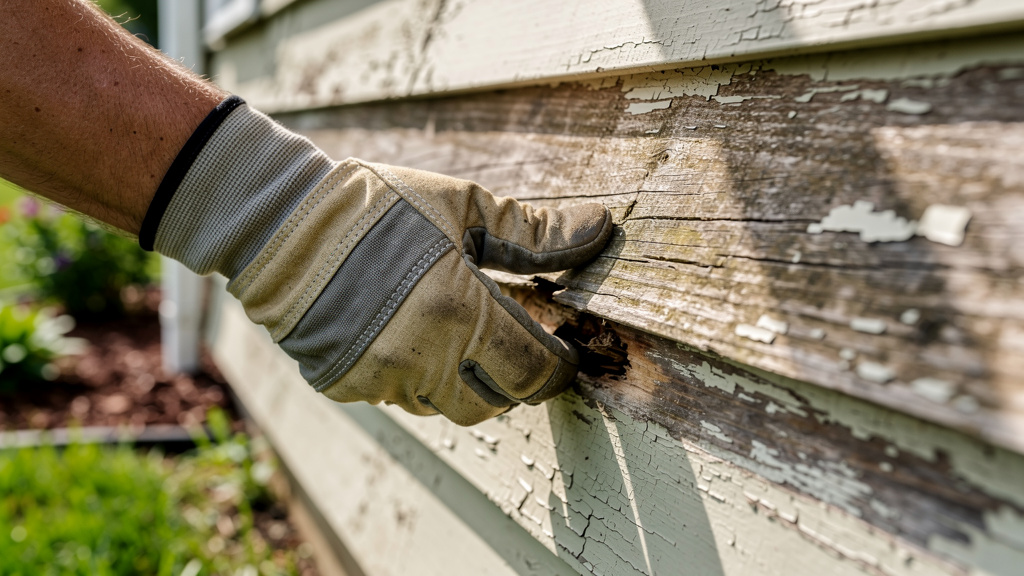
Rot becomes clear when pieces start to crumble away. Corners may round off, chunks may flake off when touched, or small holes may grow larger over time. In some cases, a screwdriver can push right through the panel with very little force. That level of damage means the siding no longer protects the sheathing or framing at all. - Rusted or popping nails
Raised nail heads or orange streaks on the face of the siding are another clue. As the boards swell and move, they can force nails outward. Those gaps let more water in around each fastener. Rust then confirms that moisture sits in that area far too often, adding more stress to nearby fibers. - Cracked or peeling paint
On pressboard siding, failing paint matters more than on many other materials. Once the outer paint film breaks, the vulnerable core has no shield. Small cracks can grow quickly, and each bare spot allows water to soak in, especially on shaded, north‑facing sides of a house that dry slowly. - Insect activity
Termites and other pests prefer damp, weakened wood and can move from damaged siding into the structure. Tiny exit holes, frass, or insect trails near problem areas add one more reason to call for a professional inspection without delay.
Modern Replacement Options And Why Fiber Cement Is The Superior Choice
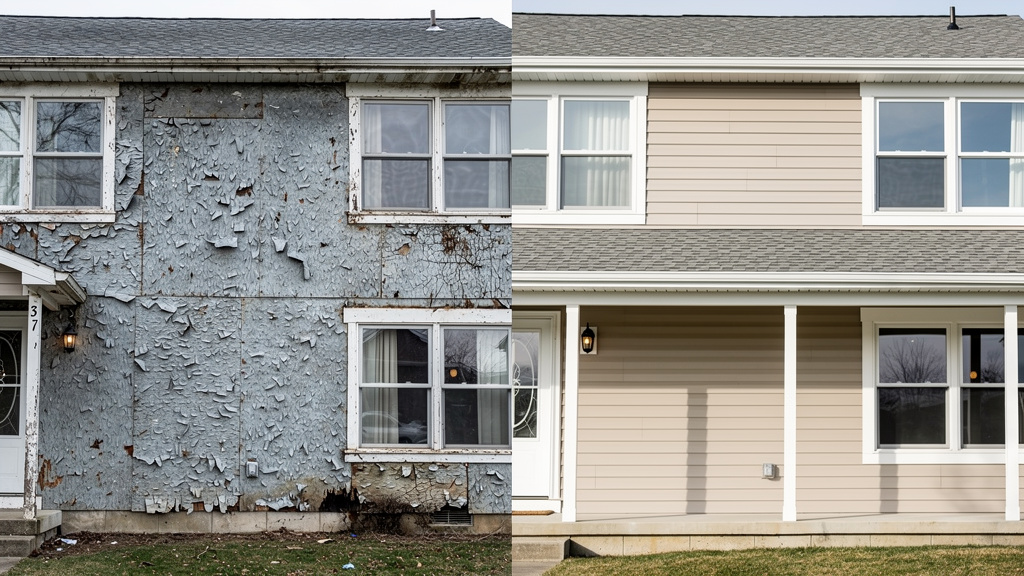
Since pressboard siding is no longer made, patching a few bad panels with new material from a store rarely works well. Modern products do not match the old thickness or texture, so repairs stand out and still leave other failing boards in place. That is why many owners who first ask what pressboard or hardboard siding is and why it fails shift quickly to the better question: what should replace it?
Among current products, fiber cement siding stands out. Brands such as James Hardie and Nichiha address the moisture problems that hurt hardboard because they do not rely on wood fibers in the same way. Fiber cement siding:
- Resists rot, warping, and pests
- Offers excellent fire resistance
- Holds paint far longer than wood‑based products
- Can last 50 years or more with proper installation and care
The surface still offers a rich wood grain look, yet it does not swell when wet. For many Atlanta‑area homeowners, that combination of appearance and long service life makes fiber cement a strong choice for siding replacement.
Keystone Siding & Windows focuses on these fiber cement systems for Greater Atlanta homes. The team:
- Removes old pressboard or hardboard siding
- Repairs any hidden rot or missing sheathing
- Installs housewrap and flashing to current standards
- Adds new siding, trim, soffit, and related components
Owner‑occupied homes receive a Limited Lifetime Workmanship Warranty, which means careful installation and long‑term peace of mind go together.
Conclusion
Pressboard or hardboard siding came from a simple idea: press small pieces of wood into panels that look like real boards at a lower cost. In practice, the wood fiber core absorbs water, swells, and breaks down, especially when installation or maintenance fall short. Once the protective skin fails, the answer to what is pressboard or hardboard siding and why does it fail becomes clear: moisture gets inside and the material starts to fall apart.
When that happens, damage can move quickly into sheathing and framing, raising repair costs and even affecting indoor comfort. Modern fiber cement siding avoids those weaknesses and offers longer life, better fire resistance, and strong curb appeal. Even the best material still depends on expert installation, proper flashing, and attention to structural repairs behind the new surface.
For homeowners around Greater Atlanta who see swelling, rot, or other warning signs, the safest step is a professional inspection rather than another coat of paint. Keystone Siding & Windows brings more than twenty‑five years of experience, an exclusive focus on James Hardie and Nichiha fiber cement, and a lifetime workmanship warranty for owner‑occupied homes. A no‑pressure consultation can show the true condition of existing siding and outline a clear plan to protect the house for decades to come.
FAQs
Question 1: How Can I Tell If My Home Has Pressboard Siding Versus Other Materials?
Pressboard siding usually appears in large four‑by‑eight or four‑by‑nine‑foot panels with a molded wood grain pattern rather than separate planks. Homes built from the early eighties through the late nineties often used it. When someone presses gently near the lower edges, the surface may feel slightly soft instead of firm. Sometimes faded manufacturer stamps appear on the back of removed panels, which can confirm the exact product.
Question 2: Can Pressboard Siding Be Repaired Or Does It Need Complete Replacement?
Minor fixes, such as new caulk and fresh paint, can slow surface damage but do not stop internal fiber breakdown once water reaches the core. Since new pressboard panels are no longer produced, matching thickness and texture for spot replacement rarely looks right. Full siding replacement lets a contractor:
- Check and repair sheathing and framing
- Address moisture sources and drainage issues
- Upgrade the entire exterior to a more durable material
That approach removes ongoing worry about hidden rot and repeated patch work costs.
Question 3: How Long Does Pressboard Siding Typically Last Before Failing?
With excellent installation and very careful upkeep, pressboard siding might last fifteen to twenty years before clear failure appears. More typical installations, with small gaps in caulk or low ground clearance, often show serious swelling or rot within ten to fifteen years. In damp climates, or on shaded sides with poor drainage, early failure can start in as little as five to ten years. Since most of these products went up decades ago, any remaining siding now sits beyond its intended service life.
Question 4: What Does It Cost To Replace Pressboard Siding With Fiber Cement?
Project cost depends on several factors, including:
- Total wall area and number of stories
- Trim details, soffits, and other design features
- How much hidden damage shows up once old siding comes off
- Choice of fiber cement style and finishes
Fiber cement does cost more at the start than the old pressboard panels, yet its long service life, low maintenance needs, and strong protection for the structure usually make the investment pay off. Keystone Siding & Windows provides detailed written proposals after a thorough inspection, including any needed framing or sheathing repairs. Homeowners can request a free, no‑obligation consultation to see clear numbers and design options for their specific house.

I believe great businesses are built by taking care of people—customers, employees, and partners alike. That’s the philosophy that has guided me and my team as we've built Keystone Siding & Windows, Inc.