Save $995 on all projects over $10,000! Learn more

Does Water and Moisture Get Behind My Stucco?
Walk past a stucco home in Greater Atlanta and it looks solid as stone. Yet many owners find themselves asking, “Does water and moisture get behind my stucco?” The surface can look perfect while rain finds tiny openings and hides inside the wall where no one can see it.
Stucco holds up well when the system behind it works the way it should. It relies on layers of paper, flashing, and drainage paths to move water back outside. When any part of that system fails, the honest answer to “Does water and moisture get behind my stucco?” is yes, and that water starts to attack the wood frame.
The problem is that this damage often hides for years. From the living room everything looks normal, while behind the stucco wood sheathing rots, insulation stays wet, and mold grows in the dark. By the time stains show up inside, the question “Does water and moisture get behind my stucco?” has already turned into expensive repairs.
This article walks through:
- How water sneaks behind stucco
- The warning signs that matter outside and inside
- What happens when the issue sits on the back burner
- How Keystone Siding & Windows tests stucco walls and replaces failing stucco with modern siding
Read through to learn what to watch for, what to do next, and how to protect both your home and your budget.
How Water and Moisture Get Behind Stucco Exteriors
Stucco is not a solid block of concrete. It is a thin cement-based skin over metal lath, building paper, and wood sheathing. The goal is not to stop every drop of water at the surface, but to catch what gets through and send it back out. When that hidden system breaks down, the answer to “Does water and moisture get behind my stucco?” is almost always yes.
Most failures start with the way the stucco went on the house. Common trouble spots include:
- Missing or sloppy flashing around windows, doors, decks, and roof lines
- Thin, torn, or poorly lapped building paper that does not shed water
- Clogged or absent weep screeds at the base of walls that trap moisture instead of draining it
Time adds even more stress. Normal settling creates hairline cracks, and hail, ladders, or everyday bumps chip the surface. What looks like one small crack from the driveway can let a surprising amount of water into the wall during every storm. That is why, when you ask, “Does water and moisture get behind my stucco?” the honest answer is often yes.
The Georgia climate and yard design can make things worse. Long, wind‑driven storms push water into every weak spot, while sun and heat cause the stucco to expand and shrink so new cracks appear. Sprinklers that spray the wall each day and soil or mulch piled high against it keep the bottom edge soaked. In older homes, or where the mix was too porous, that trapped dampness means the question “Does water and moisture get behind my stucco?” never really goes away.
Warning Signs That Water Is Behind Your Stucco
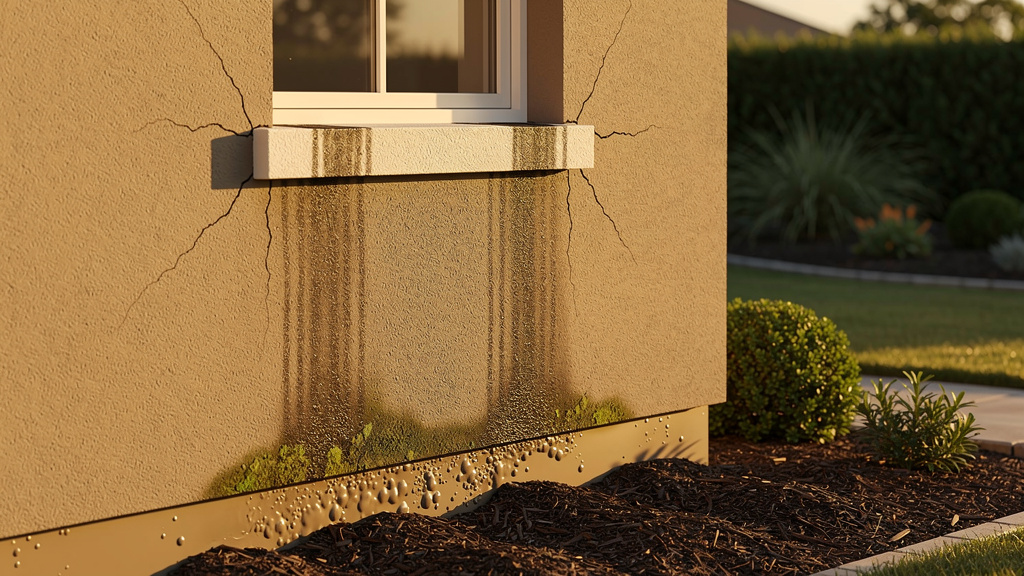
Once moisture finds a way in, the next concern is how to spot it before it does serious harm. The more a person understands the clues, the faster they can respond. Many homeowners only start to ask “Does water and moisture get behind my stucco?” after they see something odd on a wall, yet the outside often gives earlier hints.
On a dry day, take a slow walk around the exterior and scan the walls. Outside, look for:
- Cracks of any size, from thin hairlines to wider gaps
- Missing chips or areas where stucco has flaked off
- Spots where the wall looks wavy, bulged, or swollen
- Dark streaks below windows or doors
- Areas that stay damp long after rain, especially near the bottom of the wall
- Paint that blisters, bubbles, or peels near the base
- Green or black growth (algae, mildew, or mold) clinging to the stucco
- Caulk that has shrunk, cracked, or pulled away from window and door frames
Inside the house, the nose often notices trouble first, long before anyone wonders, “Does water and moisture get behind my stucco?” Watch for:
- A musty or earthy smell near exterior walls, especially after storms
- Drywall that feels soft, spongy, or cool to the touch below windows or along baseboards
- Discolored patches, bubbling paint, or stains around window corners
- Damp basement or lower‑level walls that line up with damaged stucco above
A saying many home inspectors share is, “If you can smell mold, there is already more damage than you can see.”
Patterns over time also tell a story. Stucco can hold a surprising amount of water without obvious damage on the surface, so even a few of these signs justify a closer look. If any of them sound familiar, the safest way to answer “Does water and moisture get behind my stucco?” is to bring in a specialist who can test what hides behind the finish.
The Catastrophic Risks Of Ignoring Stucco Moisture Problems
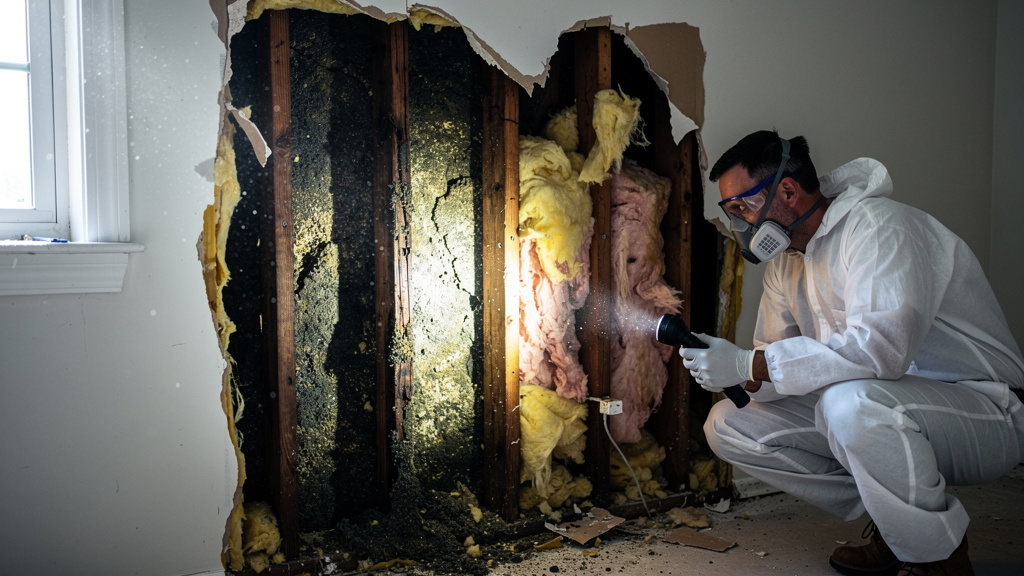
When moisture sits inside a wall, it does not dry out and heal on its own. It keeps soaking the wood, breaking down fasteners, and feeding mold. Ignoring early warning signs after asking “Does water and moisture get behind my stucco?” turns a simple exterior issue into a whole‑house problem.
Over time, wet sheathing and studs start to rot. Floors can sag, doors stop closing smoothly, and sections of wall may lose their strength. If no one checks after heavy storms, “Does water and moisture get behind my stucco?” becomes less a question and more a slow‑moving disaster. Soft, damp wood also attracts termites and other insects that chew even more of the structure. By the time this level of damage shows up, repairs can involve:
- Removing large wall sections
- Rebuilding framing
- Replacing insulation and drywall
All at a far higher cost than early stucco remediation.
A common phrase in building science is, “Bulk water is the number one enemy of buildings.”
Mold loves the dark, damp space behind failed stucco and can spread through wall cavities and air ducts. That growth harms indoor air quality and often needs specialized cleaning that runs far beyond the price of new siding. When buyers or inspectors discover long‑term moisture, they assume the worst, so the question “Does water and moisture get behind my stucco?” can turn into price cuts, lost offers, or a home that sits on the market.
Professional Services: From Detection To Complete Remediation

Once someone suspects a problem, the next step is to confirm what hides behind the stucco. A simple tap test or quick look from the ground cannot answer “Does water and moisture get behind my stucco?” in a reliable way. Keystone Siding & Windows uses professional tools to measure moisture levels so you know what you face before any work starts.
Inspectors often start with moisture meters that read the amount of water inside the wall system. For more precise results, they may:
- Drill small, discreet holes and insert probes into the wood sheathing
- Use thermal imaging cameras to spot cooler, damp zones
- Send tiny video scopes into wall cavities to see visible rot or mold without removing large sections of stucco
When tests show only dry wood and the damage is limited to a small crack, a skilled crew can patch the area and reseal it. In more common cases, high readings and wide‑spread surface issues mean any simple patch will fail. That is when “Does water and moisture get behind my stucco?” changes into “How do we stop it for good?” and full remediation makes far more sense.
Full remediation follows a clear series of steps:
- Remove the damaged stucco and expose the sheathing and framing
- Repair or replace rotten framing and sheathing
- Treat and clean any mold growth inside the wall
- Install modern weather‑resistant barriers and drainage planes
- Install new siding, flashing, windows, and trim as needed
- Seal critical joints and transitions to keep water moving out, not in
Keystone Siding & Windows then installs new siding and backs the work with a Limited Lifetime Workmanship Warranty. That way the worry behind “Does water and moisture get behind my stucco?” does not return every rainy season.
Think of professional moisture testing as an X‑ray for your walls: it shows what your eyes cannot see before you commit to repairs.
Superior Alternatives: Why Fiber Cement Siding Outperforms Stucco
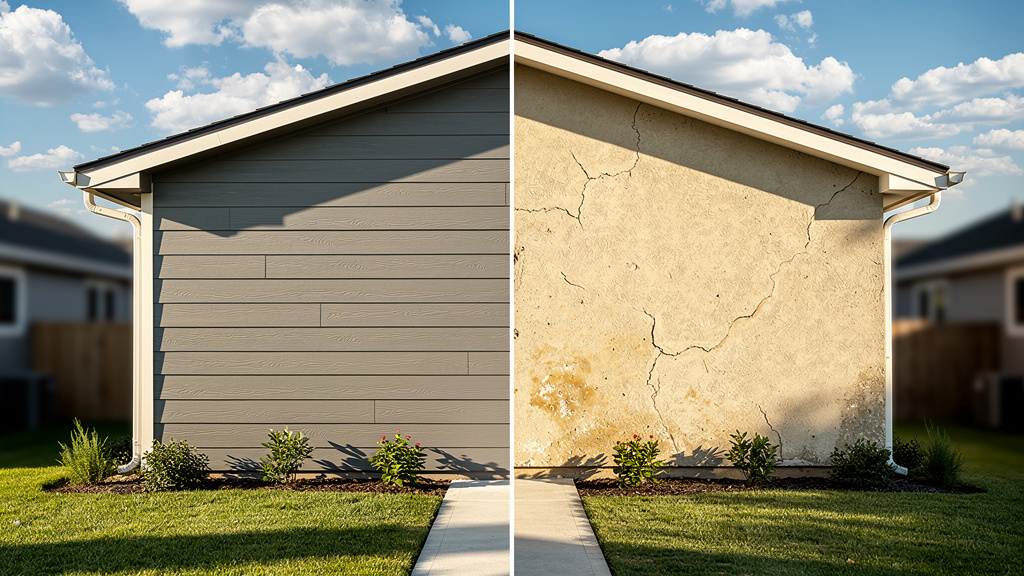
After hearing everything that can go wrong, many homeowners decide they no longer want to wonder, “Does water and moisture get behind my stucco?” Working with Keystone Siding & Windows, they choose to replace failing stucco with fiber cement siding so the wall system handles moisture in a far more dependable way.
Fiber cement siding is made from cement, sand, and cellulose fibers, so it does not rot, warp, or swell when it gets wet. It resists termites and woodpeckers, stands up well to hail and strong winds, and carries a strong fire rating. Unlike thick stucco, it does not trap large amounts of water in heavy layers, which means the question “Does water and moisture get behind my stucco?” no longer hangs over every forecast.
Keystone Siding & Windows installs fiber cement siding from leading manufacturers such as James Hardie and Nichiha. These brands back their products with strong warranties and many style choices. You can choose horizontal planks, vertical panels, or even stucco‑like textures in factory‑finished colors that hold up for years.
Keystone Siding & Windows installs these systems across Greater Atlanta, as shown by projects in places like White, GA and Roswell, and backs the work with a Limited Lifetime Workmanship Warranty. The new exterior and windows stay dry and solid so no one has to ask again, “Does water and moisture get behind my stucco?”
Conclusion
For many homes in Greater Atlanta, the answer to “Does water and moisture get behind my stucco?” is yes. Stucco systems depend on correct installation and steady care, and once water slips behind the surface it quietly attacks wood, insulation, and indoor air quality. That is why the question “Does water and moisture get behind my stucco?” should never be brushed aside or left for another season.
Keystone Siding & Windows helps homeowners move from worry to clear answers. Our team inspects stucco, tests for hidden moisture, and then recommends either targeted repairs or full replacement with fiber cement siding from James Hardie or Nichiha, along with window and gutter upgrades when needed. Work comes backed by a Limited Lifetime Workmanship Warranty, so future storms do not restart the same cycle of doubt. If the question “Does water and moisture get behind my stucco?” keeps coming to mind, schedule a free design consultation and find out exactly what is going on and how to protect your home for decades.
Frequently Asked Questions
Homeowners ask similar things once they start to worry about stucco. Clear answers help with smart next steps. These questions and answers cover the topics that come up most often.
FAQ 1: Can Stucco Be Completely Waterproof?
Stucco itself is not completely waterproof. It works as part of a wall system that uses flashing and drainage paths to move moisture back out. When those parts are installed correctly, “Does water and moisture get behind my stucco?” does not often turn into real damage, but the system still needs regular checks and maintenance.
FAQ 2: How Much Does Stucco Remediation Typically Cost?
Costs depend on home size, how much hidden damage exists, and whether you replace stucco with new siding such as fiber cement. Ignoring the problem after asking “Does water and moisture get behind my stucco?” often leads to far more expensive structural repairs and mold cleanup, so early testing is usually the least costly path.
FAQ 3: Is It Better To Repair Stucco Or Replace It With A Different Material?
Small cracks with dry, solid sheathing behind them can often be repaired if testing shows no trapped moisture. When readings stay high or damage appears in many places, full replacement is usually better for long‑term peace of mind. In those cases, a yes to “Does water and moisture get behind my stucco?” points toward fiber cement siding installed by Keystone Siding & Windows as the long‑term fix.

I believe great businesses are built by taking care of people—customers, employees, and partners alike. That’s the philosophy that has guided me and my team as we've built Keystone Siding & Windows, Inc.